



































Sourcing Mobile Phones from China: A Practical Buyer's Framework
A structured guide to sourcing mobile phones from China, covering specification definition, supplier qualification, sample validation, and acceptance criteria for buyers.
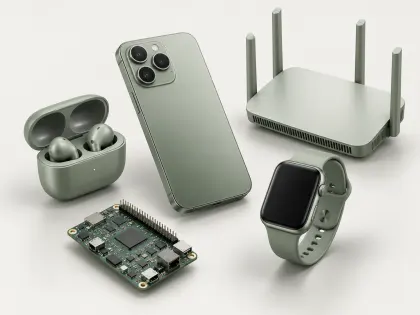
Sourcing mobile phones from China is less about finding a listing and more about matching a defined use case to a verifiable supply chain. The product category spans feature phones, entry-level smartphones, mid-range devices, rugged handsets, and accessories such as chargers and cables. Each sub-segment has different supplier profiles, quality risks, and acceptance requirements. A buyer who starts with a clear brief will make faster, more defensible decisions.
Start with the use case, not the price
Define who will use the device and under what conditions. A feature phone for voice-only field work has different requirements from a mid-range smartphone for retail staff. Write down the minimum viable specification: screen size and resolution, battery capacity, memory and storage, network bands, operating system version, camera requirements, ruggedness or ingress protection, and any software preloads. Network band support is a frequent failure point. A device that works on one carrier may not work on another, so verify supported bands against the destination market's operator requirements.
Supplier qualification: separate directory from factory
A regional directory entry is not the same as a verified manufacturing facility. Shenzhen and Dongguan host dense electronics ecosystems covering smart devices, PCBA, connectors, cables, and assembly. A supplier may be a trading company, a contract manufacturer, or a brand owner. Ask directly which role they play, request their business licence, and confirm whether production is in-house or outsourced. For mobile phones, the ability to control PCBA quality, display module sourcing, and final assembly matters more than a large showroom. Verify that the supplier can provide traceability for key components such as the display module, battery pack, and mainboard.
Sample validation before volume commitment
Order samples from at least two or three qualified suppliers and test them against the same checklist. Functional testing should cover call quality, network registration, Wi-Fi and Bluetooth connectivity, charging behaviour, battery endurance under typical use, touchscreen responsiveness, camera output, speaker and microphone clarity, and thermal behaviour during charging. Software checks include operating system version, preinstalled applications, language support, and update policy. Physical checks cover build quality, button feel, port alignment, and screen lamination.
A hypothetical scenario
Suppose a facilities management company needs 500 handsets for on-site coordinators. The brief specifies a 6.1-inch display, 4 GB RAM and 64 GB storage, dual-SIM support, a battery of at least 4,500 mAh, and compatibility with two local carriers. The buyer requests samples from three suppliers: one Shenzhen-based integrator, one Dongguan contract assembler, and one trading company. Samples are tested for two weeks. The integrator provides full component traceability and consistent firmware; the assembler offers competitive assembly but sources displays from multiple vendors, creating variation; the trading company cannot confirm battery cell origin. The buyer selects the integrator for a pilot batch of 50 units, then scales after acceptance testing. This scenario is hypothetical and illustrates a decision process, not a recommendation of any specific supplier.
Acceptance criteria and contract terms
Agree on an acceptance protocol before production. Typical criteria include cosmetic inspection standards, functional test pass rates, battery capacity verification, and packaging and labelling checks. Specify the sampling method and the consequences of failure. Clarify warranty duration, defective allowance, and the process for returns or replacements. For devices with radio transmitters, confirm that the supplier can support the destination market's type approval or certification requirements. This is a specialist area: engage a compliance consultant or test laboratory familiar with the target market's radio equipment rules. Do not assume that a supplier's existing certificates cover your specific model, band configuration, or labelling needs.
An actionable checklist
1. Write a specification sheet with mandatory and optional features.
2. Confirm network bands against destination carrier requirements.
3. Qualify suppliers by role, licence, and component traceability.
4. Request samples from multiple suppliers and test against one checklist.
5. Verify battery, display, and mainboard sourcing and consistency.
6. Define acceptance criteria, sampling method, and failure consequences.
7. Confirm warranty, defective allowance, and replacement process.
8. Engage specialist review for radio, safety, and labelling compliance.
9. Pilot a small batch before scaling.
10. Document every change to specification or supplier in writing.
Mobile phone sourcing rewards preparation. The category is broad, the supplier landscape is layered, and the compliance path depends on the destination market. A disciplined brief, sample validation, and written acceptance criteria reduce risk and make the buying decision defensible.
Share the product, specifications, quantity and destination to discuss sourcing options.